Search for specific blog posts by key words, authors, or FPHR capabilities:
Capability or Author
- Accountability & Performance Management
- Anne Graves
- Assessment & Surveillance
- Communications
- Community Partnership Development
- Emergency Preparedness & Response
- Equity
- Erika Guenther
- Grace Elmudesi
- Jenna Olson
- Jodi Walborn
- Lareesa Sandretsky
- Mary Parsatoon
- Michelle Stronach
- Organizational Competencies
- Policy Development & Support
- Spoorthy Uddurhally
- Stephany Medina
- Susan Michels
- Taylour Blakeman
- Tracy Onchwari

Is it Working? Creating a Program Evaluation Plan
Implementing a program takes community partnerships, capacity, funding and so many other resources. By the time the program is implemented, wouldn’t it be nice to know if it is working? It’s easy for evaluation to get missed. Maybe you are feeling too burnt out from actually implementing the program. Or maybe you are feeling nervous that you put in all that effort only to get results different from what you were hoping to find. Evaluation can be daunting. It helps to remember that evaluation doesn't just measure success or failure. It is a process to help us understand what a program is doing, what could be improved, and whether the program is contributing to meaningful outcomes.
Finding Balance in Performance Management
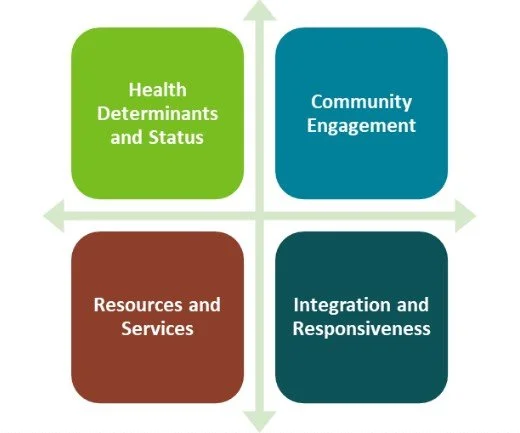
A new performance-related accountability requirement is in place for Community Health Boards (CHBs) in Minnesota. Yes, another requirement! But don’t worry, we are here to support. CHBs must demonstrate their ability to meet the following measures: developing a performance management system (2026,2027) and implementing a performance management system (2028).
Together, through measuring the various public health topic areas and the ways that they are delivered to the community, we have a system that aims to measure the range and impact of all of our public health work.
How Power Mapping Reveals Who Shapes Policy Change
The world is constantly changing through policy. You might not feel you have much control over the policies we all have to follow. But as subject matter experts in public health, we all have the power to move from policy compliers to policy starters. So, imagine a game-changing public health policy that you know can make a difference. You did your research. You know why you want to push it forward. But how do you begin communicating your great idea for a new policy? Through shifting the narrative.

How to Turn Relational, Lifesaving Public Health Work into Data
The shift to Foundational Public Health Responsibilities Nightingale Notes (FPHR NN) reporting is an effort towards more consistent ways of seeing the incredible relationship-based work of public health practitioners as data, which helps all of us understand where our public health systems are thriving, and where we need more support or resources. Here’s a true story about one day in the lifesaving work of a public health nurse. Let’s see how it would be reported as data.

Ok But What REALLY is the CHA/CHIP?
Whether you are new to public health or a seasoned professional, there is one acronym that you cannot miss hearing in the public health field - CHA/CHIP. For those who have not yet had the pleasure of being involved in the Community Health Assessment and Community Health Improvement Plan (CHA/CHIP) process it is an assessment to determine priority health areas along with a multi-year plan to address the priorities through a process seen in the image.

Layering the Swiss Cheese of Substance Use Prevention
Making a grilled cheese and preventing substance misuse have one thing in common: the more cheese the better! In the Swiss Cheese Model of Youth Substance Use Protective Factors, pictured below, the layers of cheese represent protective factors that can help prevent substance misuse while the holes represent gaps that can increase the chance of substance misuse. The more layers of cheese the more likely one is protected and prevented by slipping through the holes and becoming addicted to substances.

Truth Sandwiches and Community Guidelines: Preventing the spread of misinformation
As a public health professional, you have likely been on social media and read a health-related post or comment and thought to yourself “That is not true!” It can be easy to want respond instantly and correct people, but is that always the best option? Even if you do respond, how would you word it to educate while also not fueling the misinformation with unneeded attention?

Letting Community Take the Wheel
In our previous blog post, The E Word, we explored ways to talk about barriers to health without relying on often misunderstood or politicized terms. But what do we do next, to actually start breaking down those barriers? It starts with community.

What goes around comes around: Planning for the next CHA/CHIP report cycle
Have you recently submitted your Community Health Assessment and Community Health Improvement Plan (CHA/CHIP)? Congratulations! That calls for a celebration! And it’s a great time to start thinking about what steps you’ll take for the next one. You may be surprised how fast five years can go by in the world of public health. Here are a few tips to make sure you are staying on track to avoid rushing at the end.

One way to incorporate more coffee into your workday
If I asked you to raise your virtual hand if you love coffee, I am sure many of you reading this would have a hand up. Now what if I asked you to raise your hand if you love conducting assessments for public health programs? While assessments are important and can be enjoyable, there may not be as many hands that quickly raise up. What if you could combine the two for a public health assessment tool?

From Data to Wisdom: Applying Quantitative and Qualitative Data
In public health, we are continuously looking over or collecting data to better understand the needs of our community. But does having data mean we understand a community?

Exploring Creative Ways to Collect Data: Dot Voting
Are you a public health professional tired of using the same method over and over again to collect data? You may be one of the many who are constantly requesting others to fill a quick survey, give an interview, or participate in a focus group. While these are effective data collection methods, everything is better in moderation. In this post, we are not discouraging those platforms or methods but simply exploring other creative data collection methods such as the dot voting method.