Search for specific blog posts by key words, authors, or FPHR capabilities:
Capability or Author
- Accountability & Performance Management
- Anne Graves
- Assessment & Surveillance
- Communications
- Community Partnership Development
- Emergency Preparedness & Response
- Equity
- Erika Guenther
- Grace Elmudesi
- Jenna Olson
- Jodi Walborn
- Lareesa Sandretsky
- Mary Parsatoon
- Michelle Stronach
- Organizational Competencies
- Policy Development & Support
- Spoorthy Uddurhally
- Stephany Medina
- Susan Michels
- Taylour Blakeman
- Tracy Onchwari

Sharing Power: What does it actually look like?
We talk a lot about community engagement in public health. We invite people to meetings, ask for feedback, send out surveys, and create opportunities for community members to share their experiences. All of these things can be useful, but there’s a question worth asking: How much influence do people actually have over the decisions we’re making? That’s where power sharing comes in.

6 Tips to Meet New Digital Accessibility Standards
Did you know there are new digital accessibility requirements coming for state and local governments? They’re all about making sure everyone can access public information and services online. And it isn’t a one-time fix. It takes establishing consistent practices, making expectations clear and supports available for staff, and checking in on accessibility continually. Check out these six tips to make digital content more accessible.
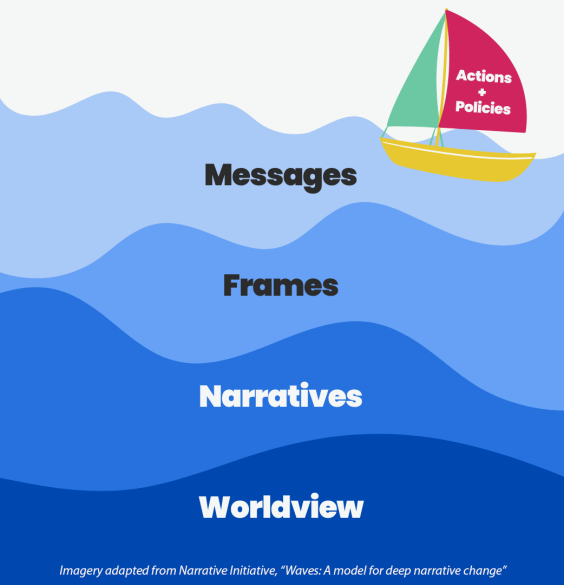
Narratives for Health: Build Power, Shift Conversations, Improve Community Health
Narrative lives in the everyday work of public health: in coalitions and partnerships, in the way we choose to collect and share data, in work plans and strategic plans, in how and what we communicate, and in education and support for policy development with decision makers.
And we have the power to shift narratives toward solutions that support fair and just conditions where everyone can be their healthiest.

Start Today: Support Wellness and Resilience Through Trauma-Informed Approaches
Voice and choice. Physical and emotional safety. Transparency. Culturally responsive interactions. Collaboration. Peer support. These are things we all want in our workplaces, medical interactions, and social lives, right? We also want them for our children, our parents, and our community. These factors are a part of the six guiding principles to trauma-informed approaches (TIA).

Letting Community Take the Wheel
In our previous blog post, The E Word, we explored ways to talk about barriers to health without relying on often misunderstood or politicized terms. But what do we do next, to actually start breaking down those barriers? It starts with community.

The E Word
Many of us are rethinking how we talk about key public health values. But you know what? Some of the words we often reach for—including equity—were never landing the way we hoped. So, what if we meet this moment with a fresh commitment to saying what we really mean? Check out these evidence-based strategies that are rooted in public health values, connect with more people, and move the conversation forward.

Why Bus Lines Aren’t Run by Health Departments
As public health practitioners, we understand that many drivers of health are beyond the traditional scope of our departments. I recently heard someone say, “I can’t create a bus system run by the health department!” It was a lighthearted comment – but it captured a serious truth: the challenges we face are too complex for any one agency to solve alone. By centering communities most impacted by health inequities, we can design interventions that are effective, equitable, and publicly supported.
And— good news! —we have tools to help us think about how we build partnerships with community.

Making Equity a Daily Practice
Health equity is more than just a buzzword in public health—it's a practice that requires attention to detail in everyday actions. While large-scale initiatives are vital, public health professionals can create meaningful change through small, intentional actions in our daily work. Ask yourself: Does the data we collect truly represent the communities we serve? Are there simple adjustments we can make to ensure our data is more complete, and actionable, helping us uncover and address gaps in access to services?

Talking Data, Equity, or Partnerships? Start with Values.
Do you have data you want to tell people about? Are health equity topics heavy on your mind, and you want others to understand? Are you working to develop a partnership? Here’s one thing you can do to help your words land in the way you intend.
Know what values the people you’re trying to reach have in common with you, as a public health professional. Name those values. Say them loud, proud, and first. When you take a moment to connect in this way, others may be more ready to hear your data, talk about equity, and take action together.