Thank you to guest author Grace Elmudesi, Public Health Planner for Emergency Preparedness with St. Louis County Public Health.
You may have heard by now that packing a go-kit and having an emergency plan is a good idea not only for your role in supporting mass care in public health, but also for your personal life. What many people don't know is that they are often forgetting a critical component of preparedness: relationships. You will be hard pressed to find someone working in emergency preparedness who feels relationships aren't the most crucial part of their work. Unfortunately, that message doesn't always get passed down to residents when we talk about how to prepare for emergencies. Moreover, we need staff in public health to know how their professional relationships can support an emergency response.
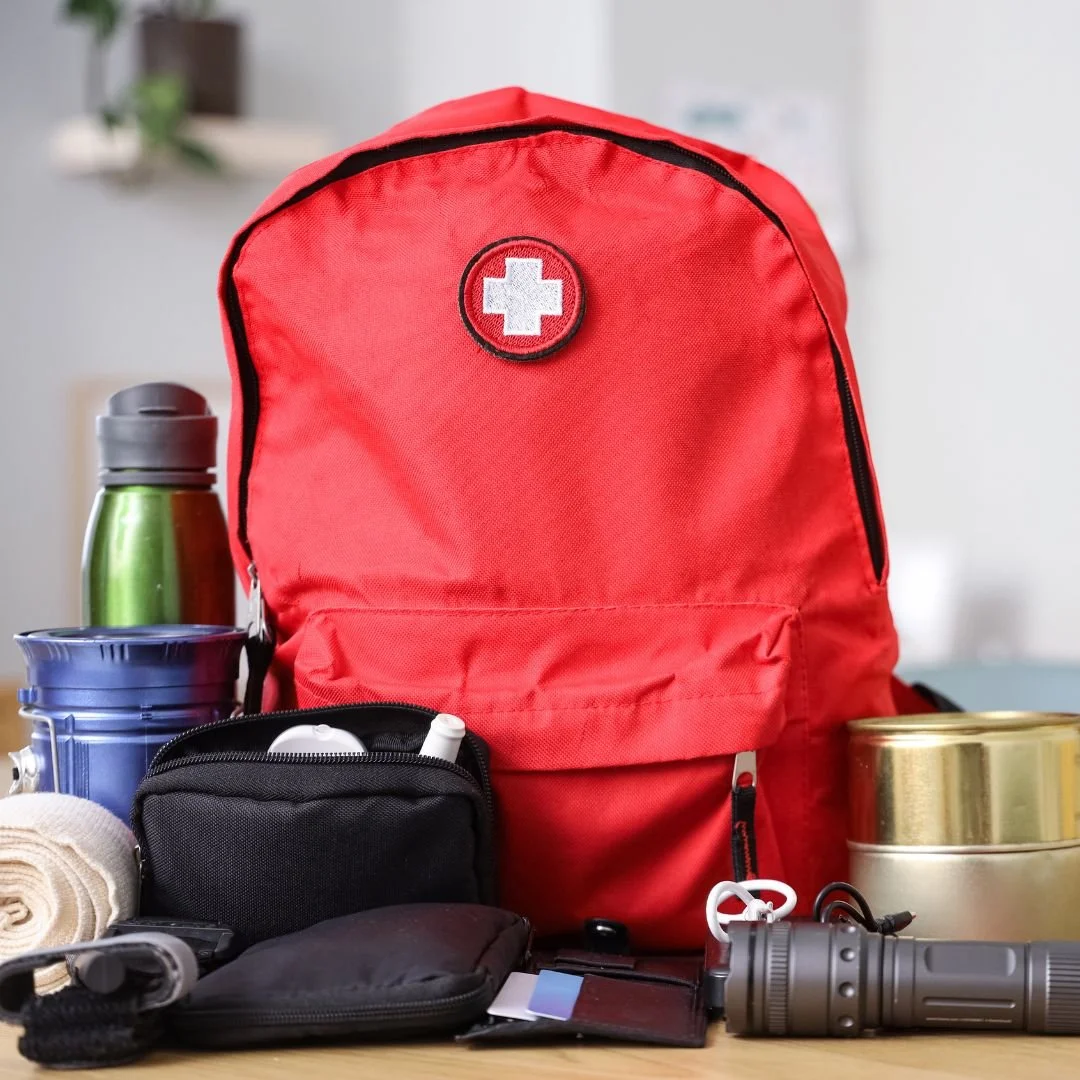
Packing a go-kit is one part of preparing for disaster. Relationship building is another.
During a public health response, many of our counties will be stretched thin. Whether that is due to staffing, resources, or if there is a discrepancy between what we can provide and what residents need. We also know that as local government, we aren't always a trusted source of information for communities. That's when we call on our community partners. Our neighboring public health agency may help us supplement staffing at a shelter, a nonprofit can take donations to get cash in the hands of those impacted, and other partners can help disseminate important incident information. As public health staff, the relationships you hold with community partners help build a foundation of trust, allowing us to act swiftly, flexibly, and together during an emergency. Without the relationships we forge daily, we would be left scrambling to locate and coordinate with those partners. For these reasons, your professional relationships and networks are a significant asset in emergencies.
Taking a few steps now can increase the resiliency of those relationships and help us prepare together for a possible emergency:
Maintain up-to-date list of contact information for the partners you work with. The list itself, or directions to access it, might be part of your Risk Communication Plan. Make sure it’s kept in an accessible location and shared with colleagues.
Talk with your emergency preparedness or emergency management team about some of the relationships you have and how they can help residents and public health staff during an emergency.
Work with your emergency preparedness team to talk with your partners about how they might be impacted during a disaster.
So how does this translate to personal preparedness? A person's path to recovery is heavily reliant on their ability to plug into and gain support from their interpersonal relationships. Simply having others to reach out to for physical and emotional support during and after a disaster is critical. During evacuations, residents who can stay with a friend or loved one tend to have more energy to focus on other parts of their recovery. During severe weather or a power outage, residents who are comfortable knocking on their neighbor's door or giving them a call can help reduce the demand on first responders. Those who have others looking out for their well-being and connecting them to resources can help someone manage negative mental health impacts post disaster. Having a community you rely on, whether it is friends, neighbors, coworkers, or family members can be your strongest form of mitigation when it comes to disaster preparedness.
Take a few steps to build relationships into your personal preparedness plan:
Identify helpers and build a support network. Identify who you can rely on in and outside of your community. Keep in mind, they don't have to be your best friend. Simply introducing yourself to your neighbor can be a great first step.
Share your personal preparedness plan with those you are more comfortable with. Let them know where you plan to meet and go after a disaster and how they can get in contact with you, then ask them the same. Share if you have any functional or accessibility needs. Maybe you are hard of hearing, use a power dependent medical device, or have limited mobility. This can be critical information to know how someone might need help during an emergency.
Keep the conversation going. Check in and update one another if your plan changes. You may even choose to update your preparedness plans together or with a small group.
For more ideas on how to build a personal preparedness plan, visit Planning and Preparedness.