The world is constantly changing through policy. You might not feel you have much control over the policies we all have to follow. But as subject matter experts in public health, we all have the power to move from policy compliers to policy starters. So, imagine a game-changing public health policy that you know can make a difference. You did your research. You know why you want to push it forward. But how do you begin communicating your great idea for a new policy? Through shifting the narrative.
In this post, we will explore the impactful tool of power mapping to reflect on how those in power can shift the way you communicate policy reform. Power mapping sets you up for narrative work, because it helps you see what conversations are needed, and with who. Which community partners might be ready to work with you? Which need to be strategically engaged?
What is Power Mapping?
Power mapping can look like the image of a power mapping template below. The map is split into four quadrants which represent different measures for power and support. The left, orange side represents those who may be in favor of your policy idea while the right, blue side represents those who might be against it. Begin to think about people in your community - residents, policy makers, nonprofits, businesses, schools, fellow public health partners - and begin placing them in the quadrants. While it is fun to think about those who would be on your side, it is just as important to consider those who might have questions, concerns, or competing interests to know how to strategically shift the narrative to engage with them about policies that give everyone a fair and just chance to be healthy.
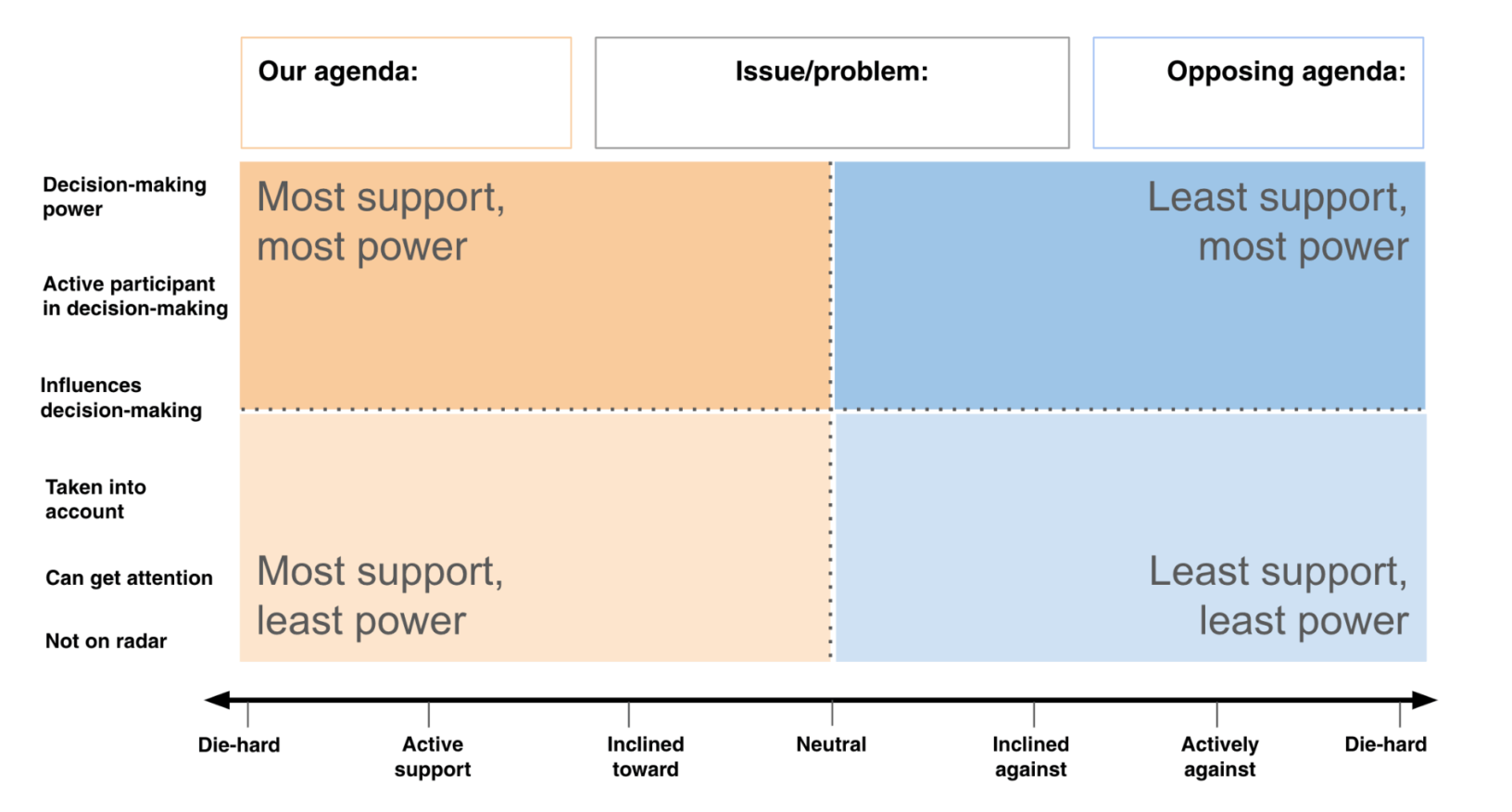
Image source Berkeley Media Studios Group 2025
Practice Power Mapping
Let’s try it together. Consider a new policy that requires all purchased school lunch meals to have at least one fruit and vegetable. Who should we consider when trying to communicate this policy?
Think about where you would consider placing the following partners:
Parents with kids who eat school lunch
School superintendents, cafeteria staff, teachers, and custodial staff?
Food suppliers
Local public health staff
Big brand processed food companies
When considering where partners might get placed in the power map, ask yourself…
Are they considered a trusted expert or messenger in the community?
What resources do these people value?
Do they have decision-making authority or the ability to approve or veto actions?
Do they control funding, budgets, or other financial resources?
Power Mapping is Adaptable
Power mapping is not only for policy. The framework can be adapted to implementing a new program or a new workplace procedure. To learn more about power mapping visit Power Mapping: What It Is & How to Use It. You can learn more about narrative shift work happening in our region from our previous post Narratives for Health: Build Power, Shift Conversations, Improve Community Health.