I was recently in Arlington, Virginia (just outside of DC) for a training with the Association of State and Territorial Health Officials (ASTHO) on leading change. It felt fitting that the cherry blossoms were in full bloom, reminding me that change is a natural process and we need to pause at times to appreciate the beauty of it. But how do we make sure our work and teams can blossom through change, rather than struggling or avoiding it?
One of the great resources I got from ASTHO was an assessment on Direction, Alignment, and Commitment (DAC).
Why do direction, alignment, and commitment matter?
Managing change involves writing protocols, following action steps, and evaluating the effectiveness of the change. But leading true systems change involves people. Does the group agree on the direction and overall goals? Is there clearly coordinated work within the group to create alignment? Are there feelings of mutual responsibility, or commitment, for the group?
Sometimes, when our change initiative gets stalled, we may be quick to point to group commitment. We put so much work into this change and people just aren’t committed to getting it done! However, we can check that assumption with a DAC assessment. Maybe, group commitment isn’t the problem. The group could be missing a clear vision of what the group needs to achieve. In that case, you should focus your efforts on direction. Or maybe there are outstanding questions from the group on how individual tasks within the group combine to fit together. This would mean you have an alignment issue within your team.
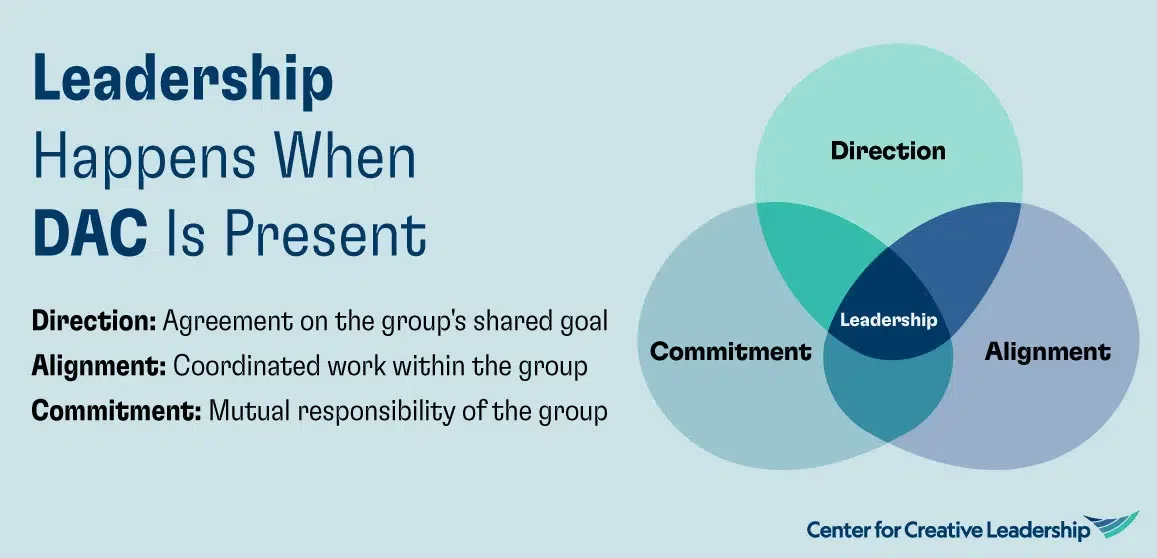
Image Source: Center for Creative Leadership
Try taking the assessment for your change initiative and see where you could begin. After you get your results, you can focus your efforts on the DAC component most needed.
What if I need to enhance group direction?
Revisit your group vision for the change you want to see. Ensure your vision is well defined and shared among the group.
Consider creating an aims statement with your team.
Assess the key goals of the change and ensure everyone understands the purpose and outcome.
Consider those within your group who already understand the shared direction of your work. How can they be mentors and influencers of others?
How can I enhance alignment?
Pull out your implementation plan. Are the action steps clearly assigned to specific units or individuals? Responsibilities need to be made clear.
Are there two-way communication channels for those on the “front lines” of the change and the managers tasked with leading it? Ensure folks can share what’s working and what may need to pivot.
Do you have a plan for monitoring progress and adjusting? If action steps need to adapt, be sure to consider how that influences the work of others and if the evolution has stayed aligned with your overall vision and goals.
What if I need to garner more commitment?
Connect goals and aspirations of individuals within the group to the shared goals of the change.
Plan for and celebrate small wins along the way.
Consider trust and team-building exercises so that there is not only commitment to the goal, but commitment to one another within the team.
Still feeling stuck? Check out the organizational readiness chart below to see what factors you may be missing.
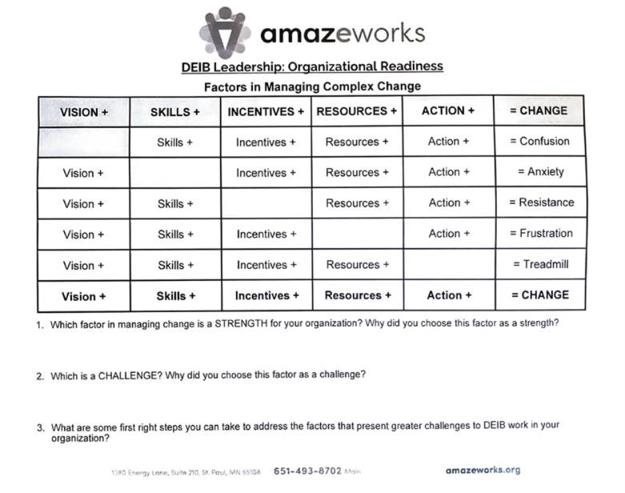
Image & content source: AmazeWorks