Congratulations! By now many of you have completed quite a few Foundational Public Health Responsibilities Nightingale Notes (FPHR NN) entries. This shift to FPHR NN reporting is an effort towards more consistent ways of seeing the incredible relationship-based work of public health practitioners as data, which helps all of us understand where our public health systems are thriving, and where we need more support or resources. Here’s a true story about one day in the lifesaving work of a public health nurse. Let’s see how it would be reported as data.
Heart-to-Heart: Public Health in Action
Written by Lisa Konicek (Program Coordinator, St. Louis County Public Health) and Spoorthy Uddurhally (Regional Child and Family Well-being Program Manager, Carlton-Cook-Lake-St. Louis Community Health Board)
One Monday morning, one of the Family Home Visiting (FHV) Nurses assigned to Heart-to-Heart (a program for pregnant people at risk of complications due to high blood pressure) contacted a family who just got home on Sunday with their newborn. This family lives outside Duluth in a relatively remote part of our county. When the FHV Nurse called, the mom sounded very tired, which was not unusual given that this mama had just given birth. As they talked more, something in the mom’s voice sounded different, and maybe it was more than just fatigue and the excitement of being a new mom. The nurse asked about her blood pressure, and the client said she hadn’t taken it. The FHV Nurse said, “I’ll wait!”
After a few minutes, the client returned to the phone and reported a blood pressure reading higher than desired. So, the nurse went through the list of signs and symptoms to assess for possible postpartum preeclampsia, hemorrhage, or other potentially life-threatening conditions. This new mom reported a slight headache and feeling clammy, so the FHV Nurse asked whether she had taken her temperature. When the mom replied that she hadn’t, the FHV Nurse said, “I’ll wait!” After a few minutes, the mom got back on the phone and said it was about 103. At that point, the nurse instructed the client to go to the hospital and that she would call the client’s provider. The mom put her partner on the phone, whom the FHV Nurse had met at each home visit, and the nurse stated concern with the higher blood pressure and very high temperature and needed to get in right away. The new dad quickly understood the gravity of the situation and said they would go right now. The FHV Nurse contacted the provider’s team, letting them know what was happening and that the client was on the way to the hospital. This client was diagnosed with sepsis and spent 3 days in the ICU. Thankfully, she recovered and is enjoying life as a mom.
Sepsis is a leading cause of maternal mortality. And while it’s difficult to know how this situation might have turned out without the persistence of a public health nurse waiting for the client to assess her blood pressure and temperature, this mom might not have made it to the hospital in time. The trusting relationship between the nurse and this couple may have saved this person’s life, and we are grateful this mom said yes to services and for the care and attention!
Let’s turn it into FPHR NN documentation!
First, ask yourself, “Which Foundational Area does each activity fall under?” See the five possible Areas in the graphic below, and additional options of Emergency Preparedness and Foundational Capability Non-Topic Specific. Then ask, “What is the scope of the activity? (Who is it serving)?” Choose between Foundational (population-level or mandated work) or Community-specific service (individual- or family-level work.)
Preparing to visit with a client
Foundational Area: Maternal, Child, & Family Health
Scope of Activity: Community-Specific Service
Conducting a postpartum visit with a client
Foundational Area: Maternal, Child, & Family Health
Scope of Activity: Community-Specific Service
Connecting with the client’s clinical care provider
Foundational Area: Access to & Linkage to Clinical Care
*If 15 minutes or more was spent on this activity.Scope of Activity: Community-Specific Service
Family Home Visiting documentation that is client-specific
Foundational Area: Maternal, Child, & Family Health
Scope of Activity: Community-Specific Service
Sharing about the experience at a public health staff meeting or community of practice
Foundational Area: Maternal, Child, & Family Health
Scope of Activity: Foundational
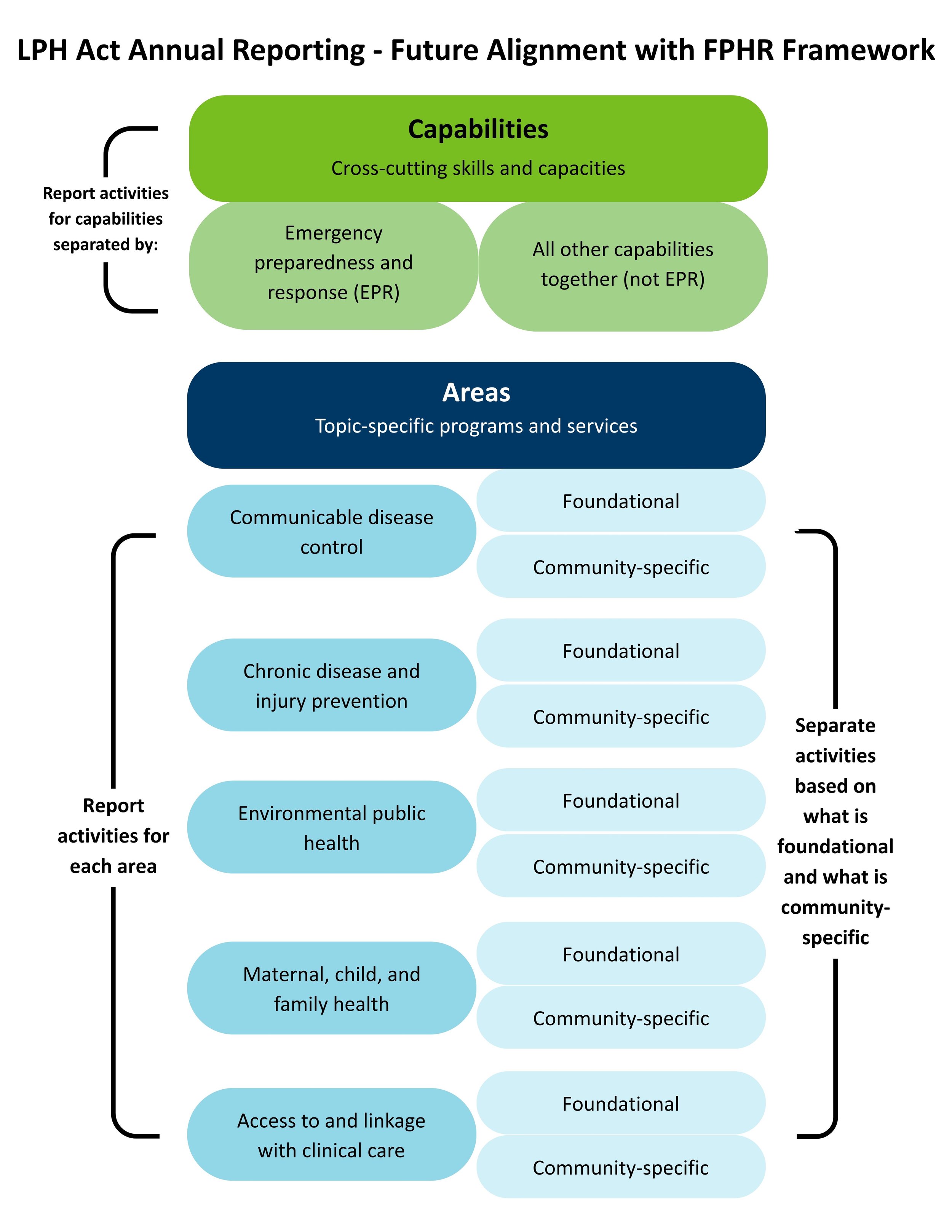
Image source Minnesota Department of Health, 2026
Additional Support Available
FPHR NN reporting is new, and there’s a lot to consider when trying to decide which option to select. If you are in the seven-county Northeast region, you can contact us for additional FPHR NN reporting support:
Erika Guenther, Public Health Planner, Aitkin-Itasca-Koochiching Community Health Board
erika@aitkin-itasca-koochichingchb.orgMary Parsatoon, Public Health Planner, Carlton-Cook-Lake-St. Louis Community Health Board parsatoonm1@communityhealthboard.org
Anne Graves, Contracted Project Manager, St. Louis County Public Health gravesa@stlouiscountymn.gov